LM-79 متحرك الكاشف Goniophotometer (مرآة نوع C)
LSG-6000
عالية الدقة التناوب مقياس الإنارة
LSG-1890B
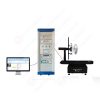
عالية الدقة دوران الإنارة
LSG-1890BCCD

مقياس المنظار للسيارة ومصابيح الإشارة
LSG-1950
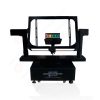
مقياس توزيع الضوء لمصابيح إشارات المرور (الطراز الاقتصادي)
LSG-1950S
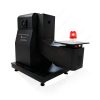
جهاز إنذار الحريق المرئي (VAD) ومقياس زاوية الضوء
إل إس جي-1930
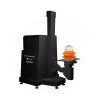
مقياس الإضاءة الأرضية لإضاءة المطارات
إل إس جي-1940
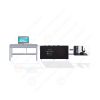
مقياس المنظار المضغوط
LSG-1200A
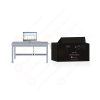
مقياس زاوية LED
إل إس جي-1100
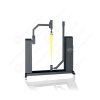
بالقرب من حقل متحرك للكشف عن المنظار
LSG-1900B
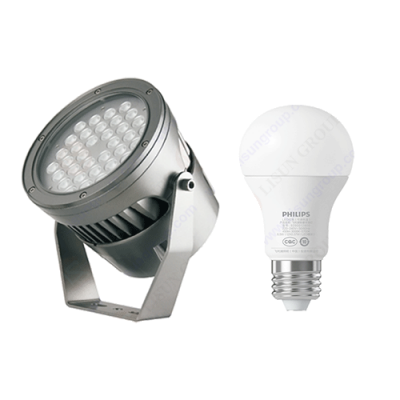 المصابيح ومصابيح اختبار الإنارة
 LM-79 و LM-80 حلول الاختبار
 حلول اختبار سائق الصمام
 حلول اختبار الأجهزة المنزلية
 حلول اختبار شبكات المحمول
 حلول اختبار إلكترونيات السيارات
 حلول اختبار الصوت والفيديو وتكنولوجيا المعلومات
 حلول اختبار الكابلات والأسلاك
 حلول اختبار المقابس والمقابس
 حلول اختبار مفتاح الطاقة
 حلول اختبار المحولات
 حلول اختبار الألعاب الكهربائية
 حلول اختبار عداد الطاقة
 حلول اختبار الأدوات التي تعمل بالمحركات
اختر منظمة
لتصفح المعايير
الملخص
The optical performance of special‑purpose lamps in transportation field is directly related to the safety of vehicle operation, rail transit, ship navigation and aerospace activities. Luminous intensity, illuminance and spatial light distribution parameters of vehicle lamps and signal lamps must strictly comply with domestic and international regulatory standards. Goniophotometer for Automotive and Signal Lamps is specially developed for vehicle‑borne and transportation‑related lamps. It adopts CIE A‑α measurement architecture and follows the test principle of dual‑axis rotating sample with fixed photometric probe, and can collect core photometric parameters such as luminous intensity distribution and illuminance. LISUN LSG‑1950 Goniophotometer for Automotive and Signal Lamps is a typical instrument of this category. It is suitable for R&D verification, type inspection and factory outgoing test of automotive lamps, special warning lamps, traffic signal lamps, rail‑transit lamps, marine lamps and special lamps for aerospace. This paper introduces the measurement principle, hardware specifications and optional expansion solutions of Goniophotometer for Automotive and Signal Lamps, sorts out testing requirements of different transportation sub‑sectors, and provides reference for instrument selection of transportation lighting laboratories.
Most general‑purpose goniophotometers adopt C‑γ or B‑β coordinate system, which are mainly oriented to architectural indoor lighting and outdoor flood lighting products. Nevertheless, special transportation lamps such as automotive headlamps, vehicle warning lamps, traffic signal lamps and aviation obstacle lights are evaluated under CIE A‑α spherical coordinate system. Its angular definition is fully matched with vehicle lamp photometric regulations, while the coordinate architecture of general goniophotometer cannot directly satisfy test requirements of ECE, FMVSS and domestic transportation‑lamp standards. That gives rise to Goniophotometer for Automotive and Signal Lamps, whose mechanical turntable and software algorithm are built entirely based on CIE A‑α system. In industries of motor vehicle, rail transit, marine shipping and aerospace, photometric distribution data of lamps is a prerequisite for product access certification. If luminous intensity, beam angle and illuminance values at different azimuths exceed regulatory limits, potential safety hazards such as insufficient recognition distance and glare interference may occur. LISUN LSG‑1950 Goniophotometer for Automotive and Signal Lamps can reproduce full‑angle scanning under A‑α coordinate system and acquire complete spatial photometric data to support R&D iteration and compliance testing of transportation lamp products.
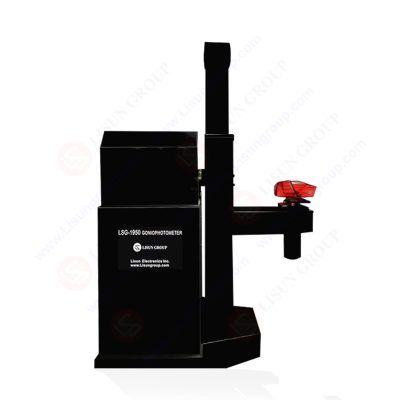
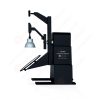
LSG-1950 مقياس المنظار للسيارة ومصابيح الإشارة
Goniophotometer for Automotive and Signal Lamps follows the test principle of dual‑axis rotating sample and fixed photometric probe. The photometric probe remains static and continuously faces the device under test. Driven by turntable, the test lamp rotates within the range of ‑180°~+180° around horizontal and vertical axes simultaneously. By changing sample posture, the probe receives outgoing light from all directions in three‑dimensional space and completes full‑space photometric acquisition under CIE A‑α coordinate system. There are differences in angular definition between A‑α coordinate system and conventional C‑γ coordinate system for general lighting. Angle A represents azimuth rotation of sample around reference normal, while angle α represents beam pitch angle. This coordinate system is consistent with data output format of lamp standards such as ECE‑R65, FMVSS108 and GB25991. Test data can be directly applied for regulatory judgment without additional coordinate conversion.

LISUN LSG‑1950 Goniophotometer for Automotive and Signal Lamps achieves angular accuracy of 0.01° and angular resolution of 0.001°. Fine‑stepping capability guarantees measurement accuracy for beam boundary and cut‑off line region of vehicle lamps. The photometric probe is standard‑equipped with CIE Class A grade. Users may upgrade to Class L high‑precision probe on demand to further reduce systematic error introduced by photoelectric conversion. Under standard light‑source condition, nominal test accuracy of instrument reaches 2%, and system stray light level is lower than 0.1%, which suppresses interference of ambient stray light on weak‑light‑signal measurement. The supporting bilingual Chinese‑English software is compatible with Win7, Win8, Win10 and Win11 operating systems. Integrated with data‑processing algorithm for A‑α coordinate system, software can output luminous intensity distribution and illuminance values at each angle and complete parameter judgment in accordance with standard requirements. Main mechanical and performance specifications are shown in the table below.
| العناصر | LSG‑1950 Technical Specifications |
|---|---|
| Rotation Range for A‑α Axis | -180 ° ~ + 180 ° |
| الدقة الزاوية | 0.01° |
| القرار الزاوي | 0.001° |
| فئة مسبار قياس الضوء القياسي | الفئة أ من CIE، والفئة ل اختيارية |
| Test Accuracy under Standard Light Source | 2% |
| نظام الضوء الشارد | أقل من 0.1٪ |
| Maximum Load Weight of DUT | 35kg |
In addition to steady‑state photometric testing, Goniophotometer for Automotive and Signal Lamps supports two important optional expansion solutions. The first optional configuration can connect with PM400F flash illuminometer for transient effective luminous intensity test of pulse‑flash lamps such as vehicle flashing warning lamps and aviation obstacle lights, complying with MH/T 6012‑1999, HB6490‑1991, ECE R65, SAE J595 and other specifications for flashing lamps. The second optional configuration can be combined with LS‑RF200 retro‑reflective photometric test system. The integrated setup is capable of testing retro‑reflective components such as raised road markers, vehicle warning signs, delineators and road marking coatings, expanding laboratory testing capability for traffic retro‑reflective materials and meeting GB, ECE, SAE, FMVSS series standards related to retro‑reflection.
Goniophotometer for Automotive and Signal Lamps covers lamp testing requirements across highway transportation, rail transit, marine shipping and aerospace sectors. For road motor‑vehicle industry, the instrument is applied to test automotive LED headlamps, special‑vehicle warning lamps, bus exterior signal lamps and traffic traffic lights, corresponding to domestic and international motor‑vehicle lamp standards including GB13954, GB25991, ECE‑R65 and FMVSS108. In rail‑transit field, it performs photometric distribution verification for various train signal indicator lamps and exterior warning lamps of carriages to evaluate signal‑beam recognition distance and glare impact on surrounding personnel. For marine industry, it conducts photometric measurement of ship navigation signal lamps to ensure reliable signal recognition during night navigation. In aerospace scenarios, with flash illuminometer equipped, it realizes transient luminous intensity test for aviation obstacle lights, aircraft navigation lights and anti‑collision lights, satisfying technical specifications of civil aviation and aviation‑industry products.
From the perspective of product R&D, optical engineers can obtain A‑α photometric distribution data via Goniophotometer for Automotive and Signal Lamps to evaluate optical design performance of vehicle‑lamp lenses and reflectors, adjust beam cut‑off boundary and avoid glare during vehicle meeting. For factory quality inspection, batch sampling test can be carried out to guarantee optical‑performance consistency of mass‑produced lamps. Third‑party testing laboratories adopt this equipment for commissioned test and certification of transportation lamps and generate photometric reports conforming to regulatory formats.
Conventional goniophotometers are designed for general civil lighting and cannot directly meet measurement requirements of transportation‑lamp regulations. With CIE A‑α measurement architecture as core, Goniophotometer for Automotive and Signal Lamps adopts mechanical structure of dual‑axis rotating sample and fixed photometric probe to accurately acquire key photometric indicators including luminous intensity distribution and illuminance of vehicle lamps and signal lamps. Represented by LSG‑1950 Goniophotometer for Automotive and Signal Lamps features high angular positioning accuracy and excellent system stray‑light control. Optional accessories can extend testing functions for flashing light sources and retro‑reflective materials, covering transportation lighting products for highway motor vehicles, rail transit, ships and aerospace. When selecting equipment for transportation lighting laboratories, besides angular and photometric accuracy, users should also examine native software support for CIE A‑α coordinate system as well as compatibility of optional modules for flash light and retro‑reflection test. In this way, complete R&D and certification‑testing demands for various transportation lamps can be fulfilled and service safety of transportation lighting products can be ensured.
العلامات:LSG-1950لن يتم نشر عنوان بريدك الإلكتروني. الحقول الإلزامية مشار إليها *

 الإنجليزية
 中文简体
 Русский
 Español
 Português
 Türkçe
 العربية
 Deutsch
 Polski
 Italiano
 Français
 한국어
 ไทย
 Tiếng Việt
 日本語